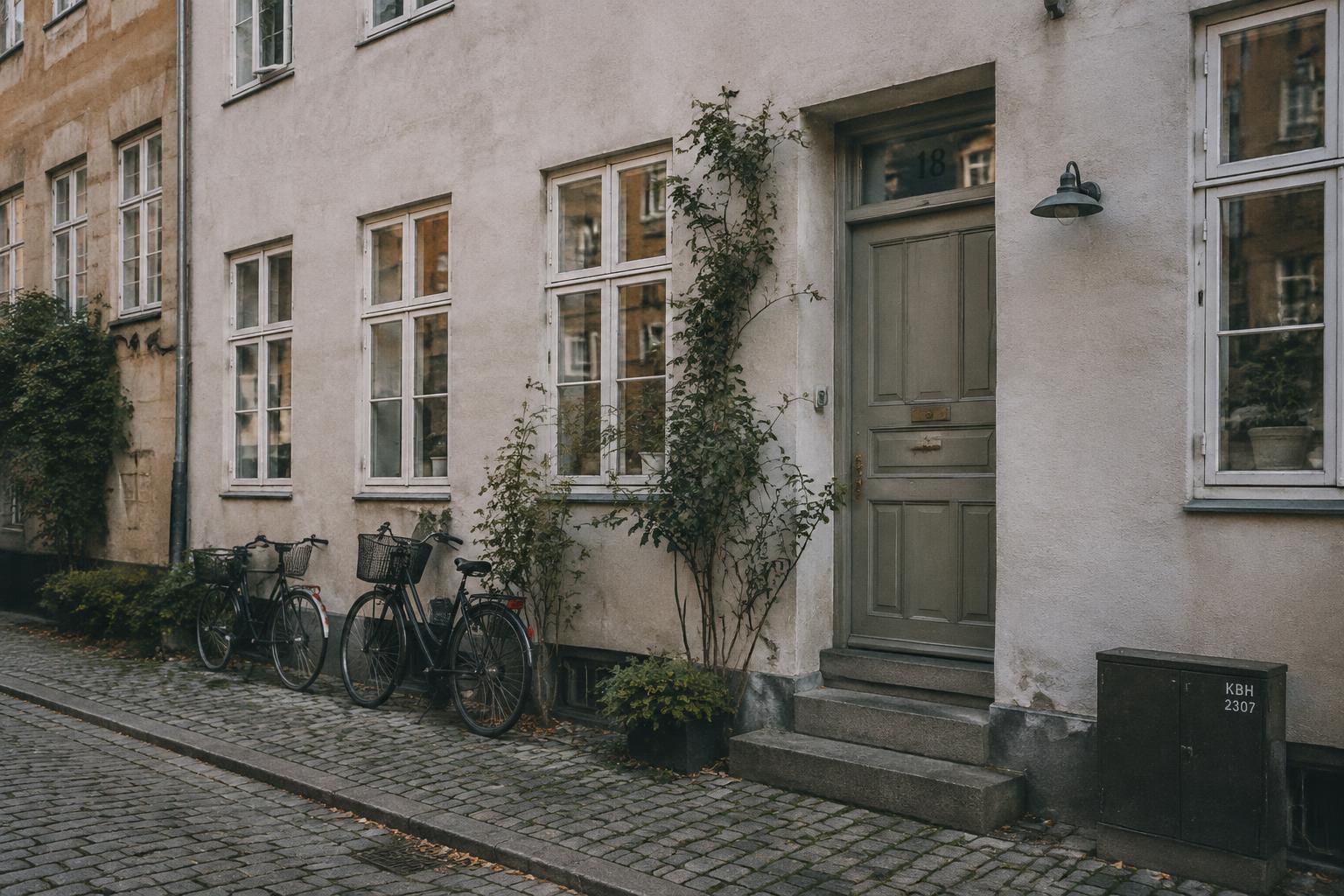
A pale plastered Copenhagen city house with tall windows, a simple door, and bicycles on the cobbles

Copenhagen, Denmark

Lansman House Copenhagen

A quiet city house shaped by light, design, and Danish restraint.

Coming soon

The story

A house shaped by light

Copenhagen has always understood that beauty does not need to announce itself.

Lansman House Copenhagen takes its cues from that sensibility: a private city residence defined by proportion, natural materials, quiet craftsmanship, and the changing quality of northern light.

The house is imagined as a place for long stays and everyday rituals — mornings that begin slowly, afternoons spent between the city and the house, and evenings gathered around the table.

It is not designed to impress on arrival. It is designed to become more meaningful the longer you stay.
Architecture

Restraint, carefully considered

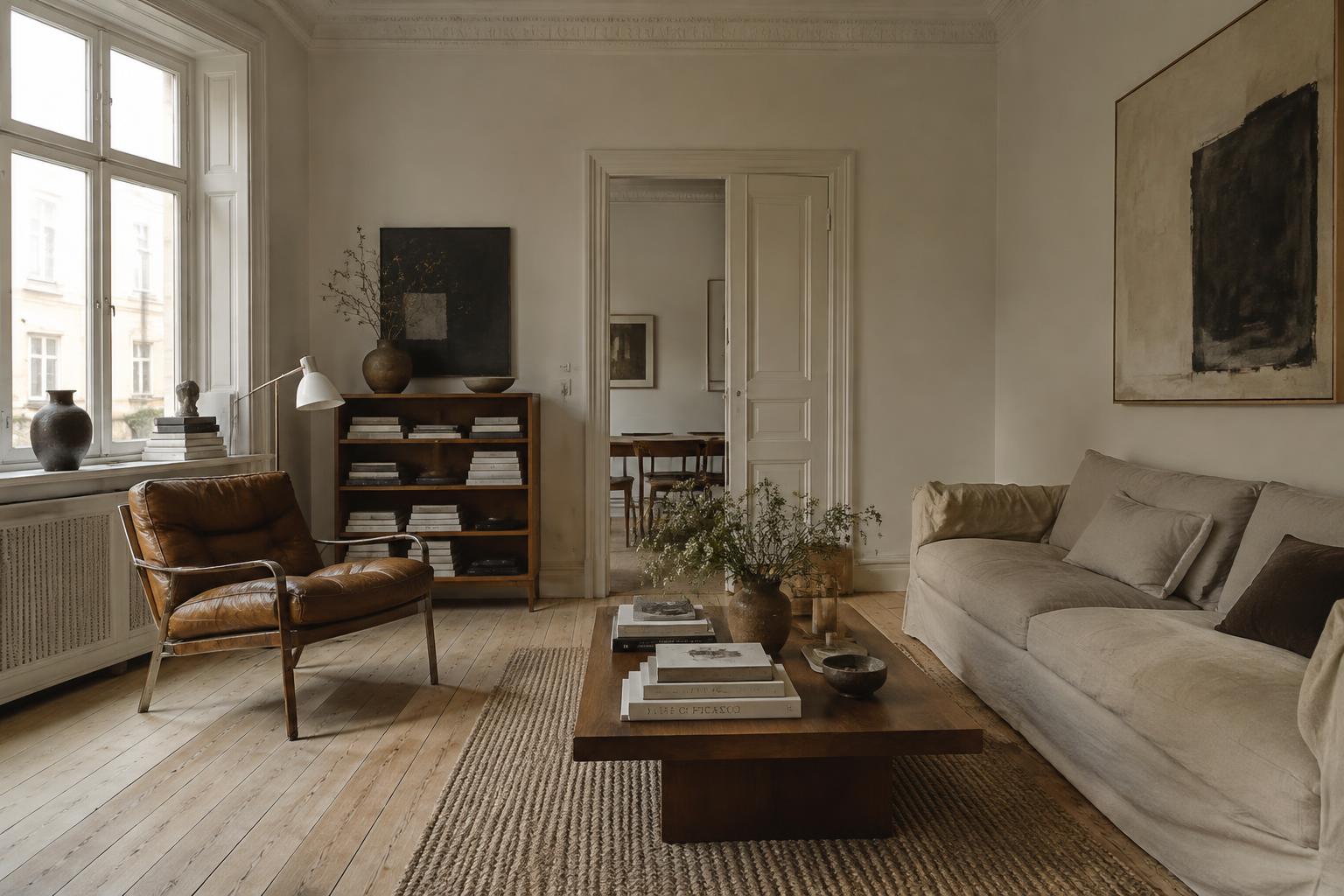
The architecture is intentionally quiet. Pale plaster, oak floors, tall windows, simple mouldings, stone thresholds, soft textiles, and rooms arranged with an understated sense of order.

Original details are preserved wherever possible. Contemporary interventions are precise and nearly invisible.

Lighting is warm. Technology recedes. Materials are chosen for how they age rather than how they photograph.

The house should feel calm, useful, and deeply considered.

A pale sitting room with oak floors, linen seating, books, and tall windows

Setting

A city best known slowly

Copenhagen rewards familiarity. The pleasure is in repetition: the same bakery in the morning, bicycles outside the door, a walk along the water, flowers from the market, dinner somewhere small enough to remember you.

The house is imagined within that rhythm — connected to the city, but slightly removed from its pace.

Close enough to participate. Private enough to return home.

Rooms

Quiet rooms, made to be lived in

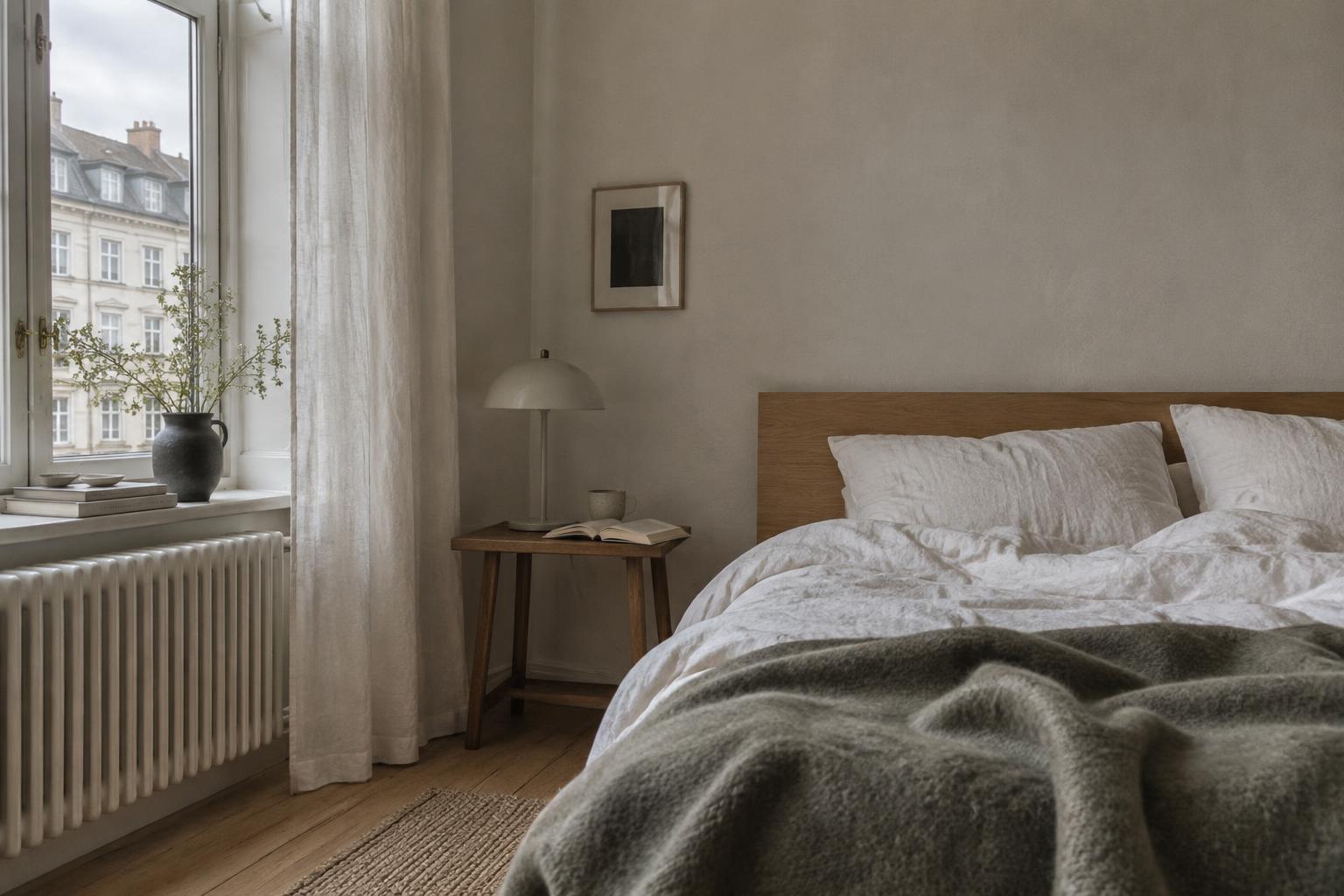
The rooms are composed rather than decorated. Oak, linen, wool, leather, ceramics, books, and art are layered with restraint.

Some spaces are pale and filled with daylight. Others are darker, warmer, and designed for winter.

Furniture is chosen for comfort, proportion, and longevity. Nothing is there simply to fill a room.

The result should feel less like a designed interior and more like a house that has slowly found itself.

Hygge

A warmth that has to be made

Hygge is often translated as cosiness, but it is closer to care. It is the deliberate making of warmth in a place where the light leaves early.

In the house it appears as small decisions rather than gestures: lamps set low around the room instead of overhead, wool within reach of every chair, a fire laid in the morning so it can be lit without thought, curtains drawn against the dark at four o'clock.

It is also a matter of company. Hygge asks for few people rather than many, for the same table each evening, for conversation that can pause without anyone hurrying to fill it.

Nothing about it is decorative. It is simply how the winter is made habitable, and it is the reason a Danish house feels generous in the months when the weather is not.

The table

Supper, simply

Breakfast is bread, butter, coffee, and whatever is in season. Lunch is often elsewhere. Dinner brings the house back together.

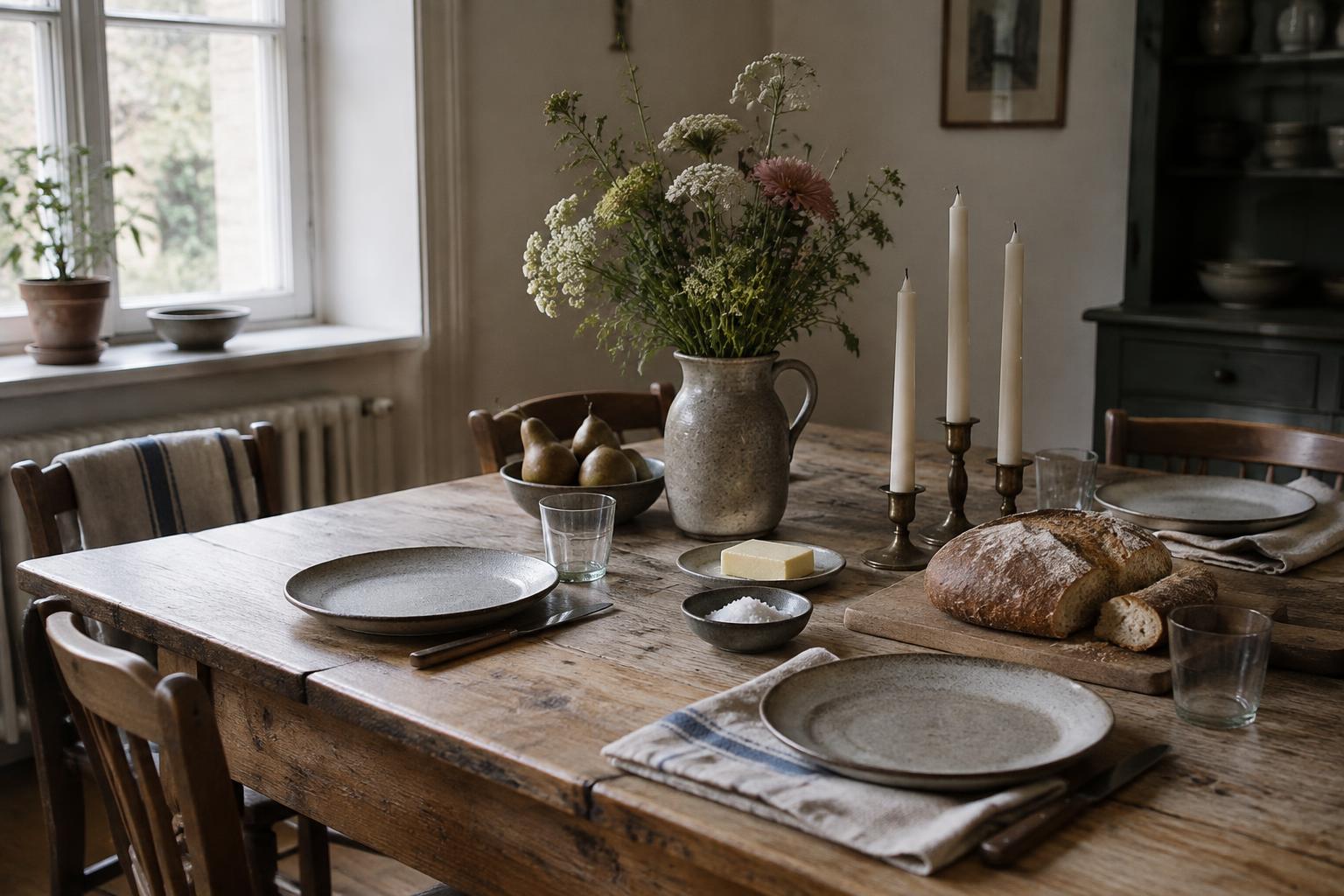
The Copenhagen table is simple and generous: candlelight in winter, open windows in summer, good ceramics, flowers from the market, bread still warm, and food served without ceremony.

Candles are lit at every meal from autumn onward — not for effect, but because the Danes have always measured an evening by the light they choose to sit in.

The setting changes with the season. The feeling does not.

Rituals

The rhythm of the north

Coffee by the window before the street fully wakes. A bicycle waiting downstairs. Fresh bread wrapped in paper.

A long walk along the water. Afternoon light moving slowly across the floor. Candles lit earlier than expected.

In the darker months the house turns inward: blankets left over the arms of chairs, a pot on the stove for most of the afternoon, friends arriving without much notice and staying longer than planned.

Dinner at home. A book left open beside the bed.

Copenhagen should feel less like a destination and more like a way of living.

Gallery

A quiet bedroom with linen bedding, oak, and soft northern light
A simple supper table with stoneware, bread, and market flowers
Afternoon light across the sitting room floor

Private by nature

Discretion without distance

The house is intended to feel residential from the moment of arrival. Service is personal and largely unseen. The scale is intimate. Guests are free to move through the house and the city without the formality of conventional hospitality. Privacy here is not isolation. It is ease.

Private Enquiries